
Redmineflux blog - Redmine plugin notes for delivery teams.
For teams of 10–300 running Redmine. Tips, plugin updates, and AI workflows.
Latest articles

Informational
Redmine Theme Comparison: Daisy vs Scarlet vs Lotus —Which One Fits Your Team
Redmine’s default interface is functional but plain, and it looks it which is exactly why a Redmine theme is usually one of…
Informational
Redmine Time Tracking: Complete Guide for Billable Teams
Redmine time tracking gives every hour worked a specific address in the project record. A time entry is not just a note…
Informational
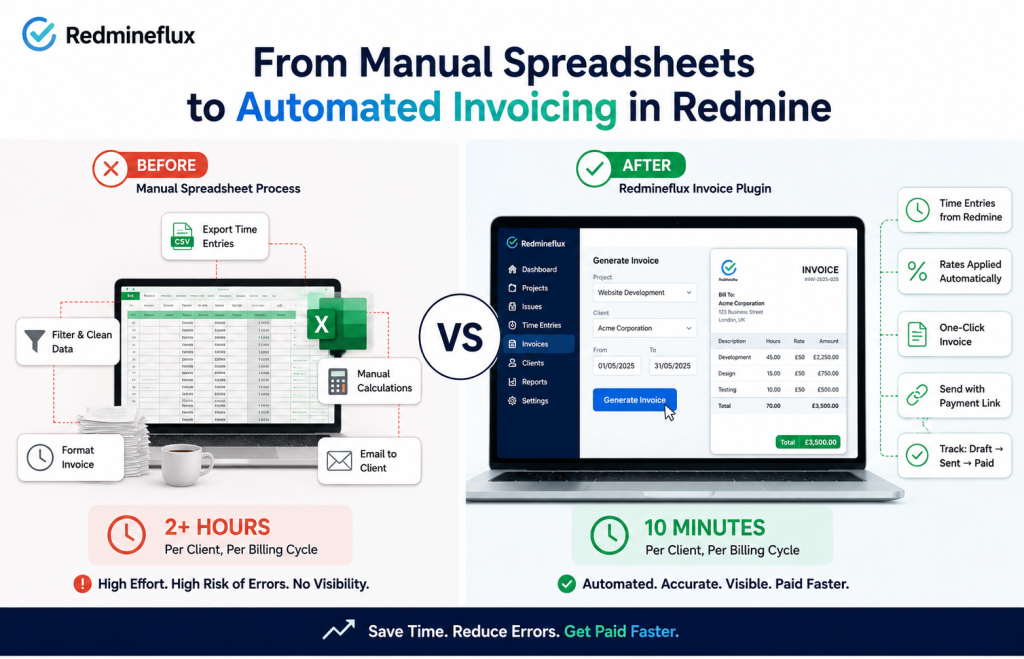
Redmine Invoicing: Manual Spreadsheets vs the Redmineflux Invoice Plugin
The Redmineflux Invoice Plugin generates client invoices directly from logged Redmine time entries. Teams currently using manual CSV exports and spreadsheets spend…
Informational
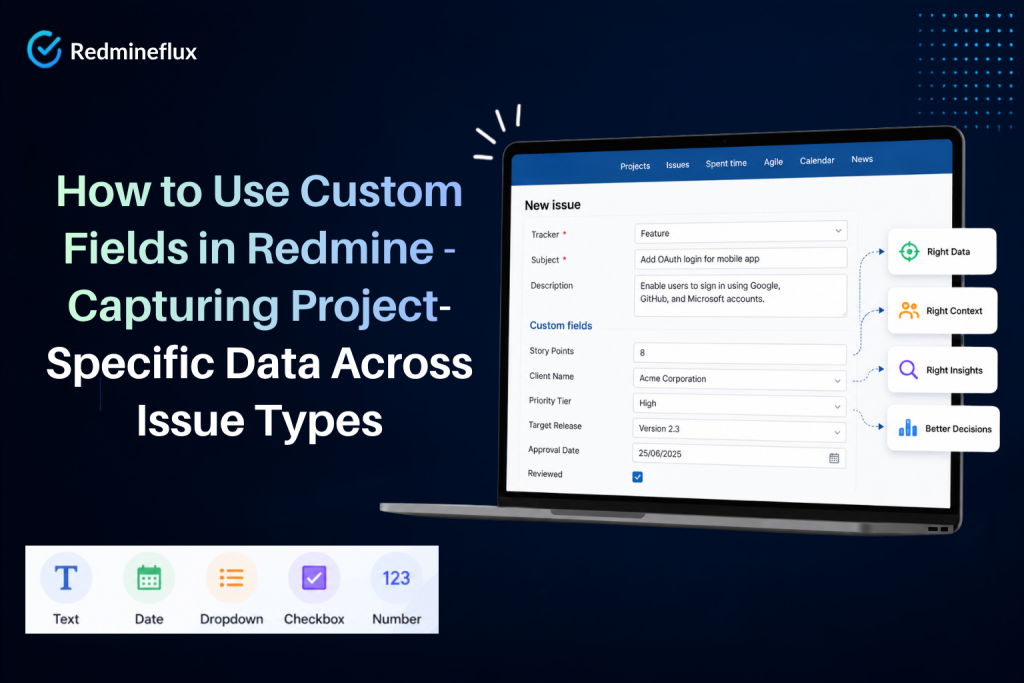
How to Use Custom Fields in Redmine – Capturing Project-Specific Data Across Issue Types
Redmine custom fields let administrators add project-specific data to any issue type and every project has data that Redmine’s defaults do not…

Informational
Redmine Notification Plugin — How to Set Up Email Alerts and In-App Notifications
A Redmine notification plugin solves a specific problem Redmine’s default email alerts are binary. Developers receive an email when assigned an issue,…
Informational
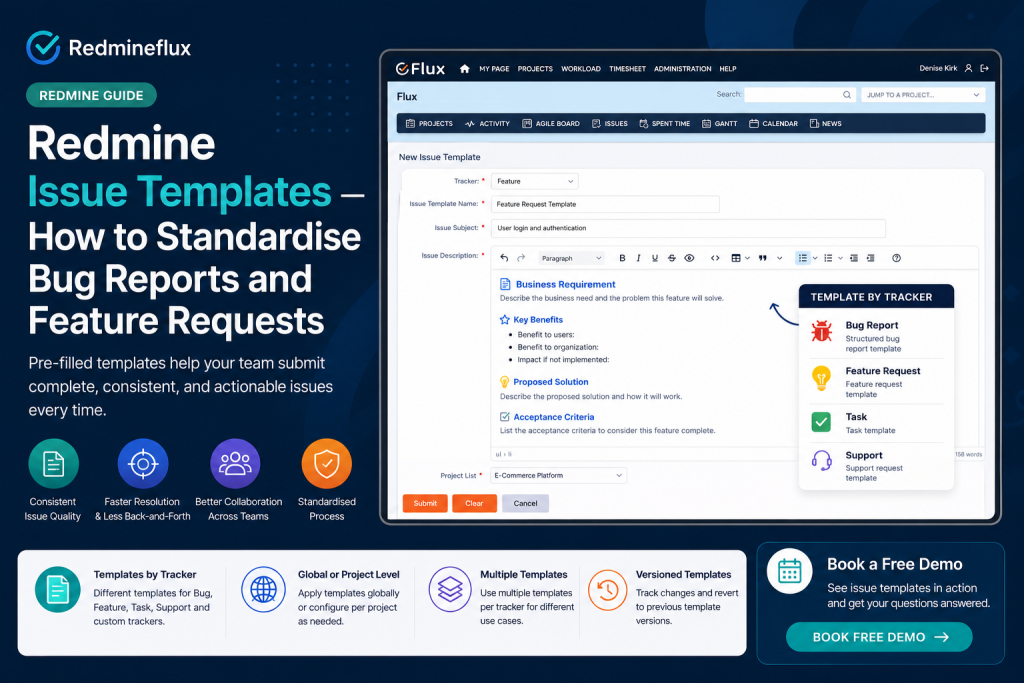
Redmine Issue Templates — How to Standardise Bug Reports and Feature Requests
Redmine issue templates solve a specific problem bug report quality determines how quickly bugs get fixed. A report with a clear summary,…
Comparison
Redmine vs Azure DevOps 2026 — How to Choose for Your Development Team
Development teams comparing Redmine vs Azure DevOps frequently find two tools at opposite ends of the spectrum. They solve similar problems tracking…

Informational
Redmine Checklist Plugin — How to Enforce Completion Standards Across Your Team
Every team has a definition of done. Without a Redmine checklist plugin enforcing those steps, developers close issues when they believe the…